

❄️ Winter Sale. Offer Ends 11/27/2026. View Details
❄️ Winter Sale. Ends 11/27/2026. View Details
❄️ Winter Sale. View Details
Artists
Subjects
Movements
Collections
Decor
Portraits
Commissions
Framing
Reviews
Gift Cards
On Sale
Jacob Jordaens Oil Painting Reproductions
Shop museum-quality reproductions of Jacob Jordaens’s most famous paintings, each hand-painted in oil on canvas by a professional artist.
Shop Art
Showing 1-40 of 50 results
Sort By
Most Popular
- Most Popular
- New Arrivals
- Best Sellers
- Alphabetical A-Z
- Alphabetical Z-A
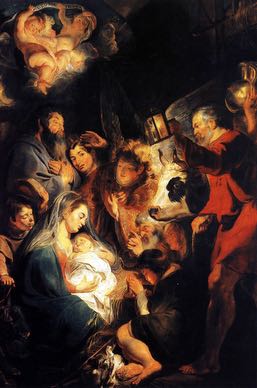
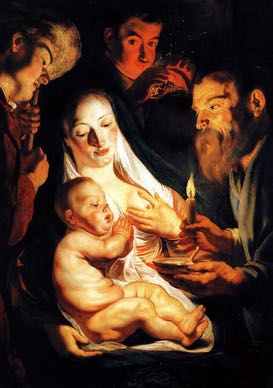
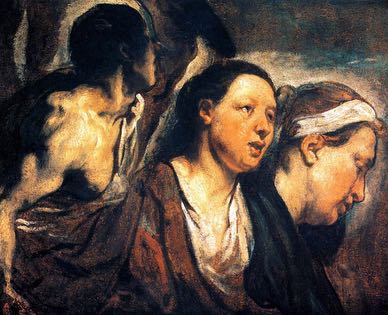
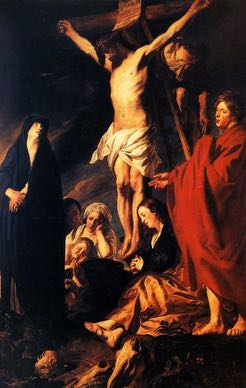

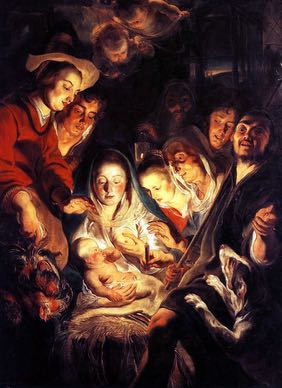


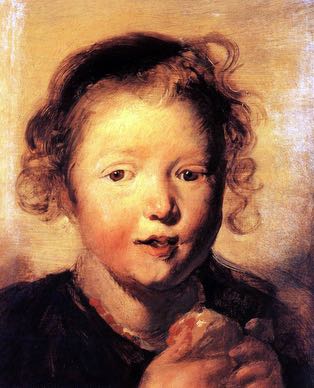
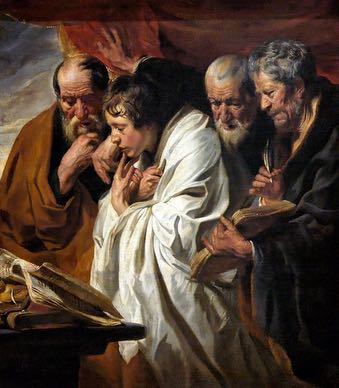
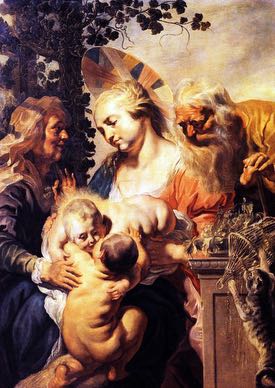
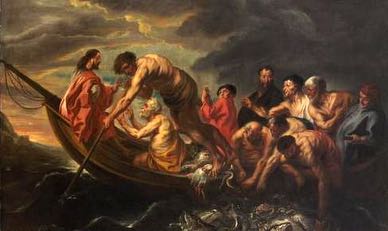
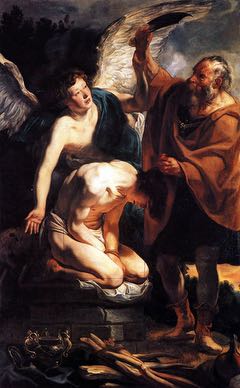
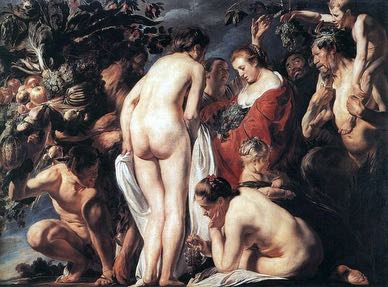
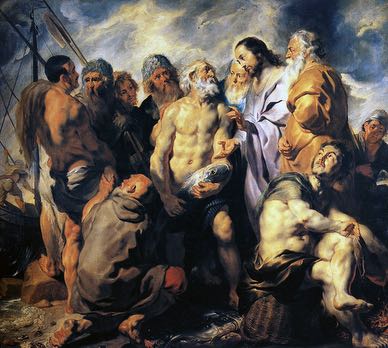

From: $786.00$393.00


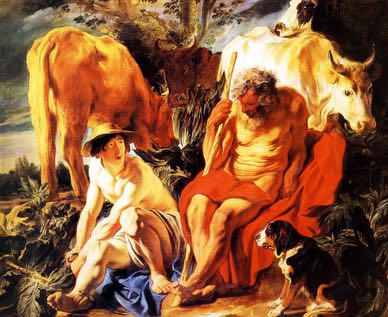
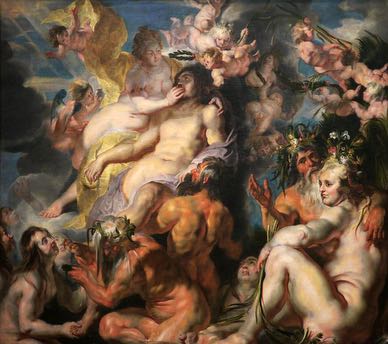
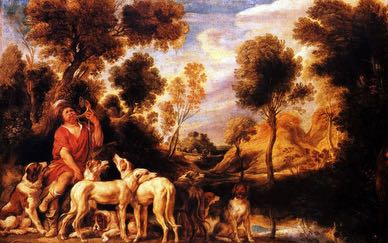
Can’t Find the Painting You Want?
Send us a reference image. We can recreate almost any artwork in the size and style you’re looking for.
Get a Free QuoteHand-Painted Jacob Jordaens Reproductions
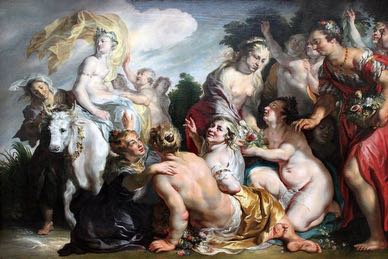
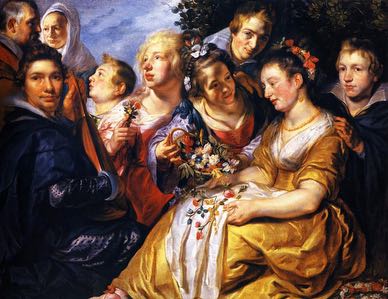
Bring Jordaens’s art into your home with an oil-on-canvas reproduction hand-painted by a professional artist. Our collection features dozens of paintings, including The Artist with the Family of His Father-in-Law Adam van Noort, The Daughters of Cecrops Finding the Child Erichthonius, and The Four Evangelists. Discover family portraits, biblical narratives, mythological scenes, and other subjects closely associated with Jordaens. Every reproduction is a real oil painting, offering depth and texture that a print or digital transfer cannot provide. From iconic masterpieces to lesser-known works, find a Jordaens painting that suits your space.
The Making of a Jacob Jordaens Oil Painting Replica
Creating a Jacob Jordaens oil painting replica requires patience, precision, and an understanding of the original artwork. Our studio includes artists who specialize in Baroque painting and understand the distinctive qualities of Jordaens’s work. The artist begins by studying the source image, then recreates its warm colors, substantial figures, and Jordaens’s expressive handling of faces and gestures on canvas using traditional oil-painting methods. After completion, the painting is inspected by our quality-control team and photographed for your approval. The result is a carefully executed oil painting that reflects the visual character of the original.
Custom Sizes and Frames for Your Jordaens Painting
Your Jordaens painting can be ordered in practically any size, from popular standard dimensions to custom canvas sizes selected directly on the product page. This flexibility lets you choose a painting that fits your wall and complements your room perfectly. After selecting the size, you can choose from high-quality frames in classic or modern designs, with professional canvas stretching also available. Our framing options complement the warm colors and substantial figures of Jordaens’s paintings. With sizing, stretching, and framing arranged in one order, your artwork can arrive ready for display without a separate visit to a frame shop.
Order a Jacob Jordaens Reproduction with Confidence
Buying hand-painted art online should feel clear and comfortable. After your Jacob Jordaens reproduction is completed, we send high-resolution photographs for your review before shipping. You can inspect the composition, colors, and overall finish, then request adjustments if needed. The painting is dispatched only after you approve it, so you know what to expect when it arrives. Your order also includes free express worldwide shipping and is covered by our 90-day return policy. Together, these assurances help you purchase a Jordaens oil painting with greater confidence and peace of mind.
The Life and Art of Jacob Jordaens
Jacob Jordaens was a Flemish Baroque painter, draughtsman, and tapestry designer born in Antwerp in 1593. He gave biblical stories, ancient myths, family portraits, and popular proverbs a vivid physical presence through warm color, substantial figures, and expressive gestures. Trained by Adam van Noort, he developed an independent career alongside Rubens and became one of Antwerp’s leading painters after Rubens’s death. His crowded feast scenes are only part of a wider achievement that includes devotional paintings and ambitious court commissions. Working chiefly from his native city, Jordaens built an international reputation while bringing familiar faces and everyday behavior into grand painting.
Read More
Where Did Jacob Jordaens’s Career Begin?
Jacob Jordaens was born in Antwerp on 19 May 1593, the eldest child of a prosperous family. His father traded in textiles, placing the future painter within the commercial life of a city that remained an important center for art despite the political and religious divisions of the Netherlands. He is also known as Jacques Jordaens, a form used in museum collections and historical documents.
In 1607 he entered the workshop of Adam van Noort. Training involved learning to draw, prepare compositions, and handle the practical demands of a professional studio. Jordaens became a master in Antwerp’s Guild of Saint Luke in 1615–1616, registered as a painter in watercolor. This detail matters because his career would extend beyond oil paintings to drawings, colored designs, and work for tapestry production.
He married his teacher’s daughter, Catharina van Noort, in 1616. The connection joined professional training with family life, but Jordaens was building a career of his own. By 1621 he was serving as dean of the painters’ guild and taking pupils. His emergence depended on the institutions, workshops, and households of Antwerp, rather than on a move to a distant court.
Was Jordaens a Pupil of Rubens?
Jordaens trained with Adam van Noort, who had also taught Peter Paul Rubens. Calling him simply Rubens’s pupil obscures that separate education. Rubens nevertheless became a decisive artistic example after returning from Italy in 1608, and Jordaens later collaborated with him as an independent painter on major projects.
In 1636–1637 Rubens involved Jordaens in commissions for the Spanish Crown. Such work linked Antwerp workshops with royal collections abroad and required painters to translate designs into substantial finished canvases. Collaboration did not mean that every participant’s work became indistinguishable: attribution depends on the particular painting, its design, and the evidence for its execution.
Jordaens also developed beside Anthony van Dyck, whose career led toward Italian aristocratic patrons and the English court. Jordaens remained chiefly based in Antwerp. His own distinction emerged in broad, weighty forms, close gatherings, and faces that often seem drawn from ordinary encounters. Rubens, Van Dyck, and Jordaens shared an artistic environment, but their careers offered different answers to what a successful Flemish painter could become.
How Did Familiar Faces Enter Grand Painting?
Jordaens’s group portraits show that family life could be a subject of considerable artistic ambition. In The Artist with the Family of His Father-in-Law Adam van Noort, made around 1616, the young painter appears playing a lute within his teacher’s family circle. Music contributes to an image of cultivated companionship, while the arrangement turns a gathering of recognizable people into a carefully constructed public statement.
The occasion is less certain than the title might suggest. The Kassel museum records both the traditional connection with Jordaens’s engagement and a more recent interpretation of the painting as a demonstration of his independent abilities after training. It should not be presented as an uncomplicated wedding photograph in paint. Its learned references and deliberate arrangement belong to the artist’s professional self-presentation.
In The Painter’s Family of 1621–1622, now in the Prado, Jordaens portrayed himself with Catharina, their daughter Elisabeth, and a servant. Elegant clothing and the setting assert prosperity as well as affection. The servant’s presence also reminds us that the ease of a prosperous household depended on work performed by others. These pictures describe a social position as much as a family bond.
Can Jordaens’s Feasts Be Taken at Face Value?
The King Drinks is among his best-known recurring subjects. It depicts the celebration of Epiphany, when a member of the gathering assumes the role of king and the company responds to his drinking with a toast. Jordaens returned to the subject in paintings and drawings, making the table a stage for raised glasses, animated faces, and competing gestures. Its pleasure belongs to the shared practices of everyday life, but it is also a performance composed for viewers.
The pictures should not all be reduced to a single moral. The tradition allowed both enjoyment and criticism of excess, and individual versions differ. Laughter, appetite, and loss of self-control can occupy the same space. The viewer is drawn into the company while also given enough distance to notice its behavior.
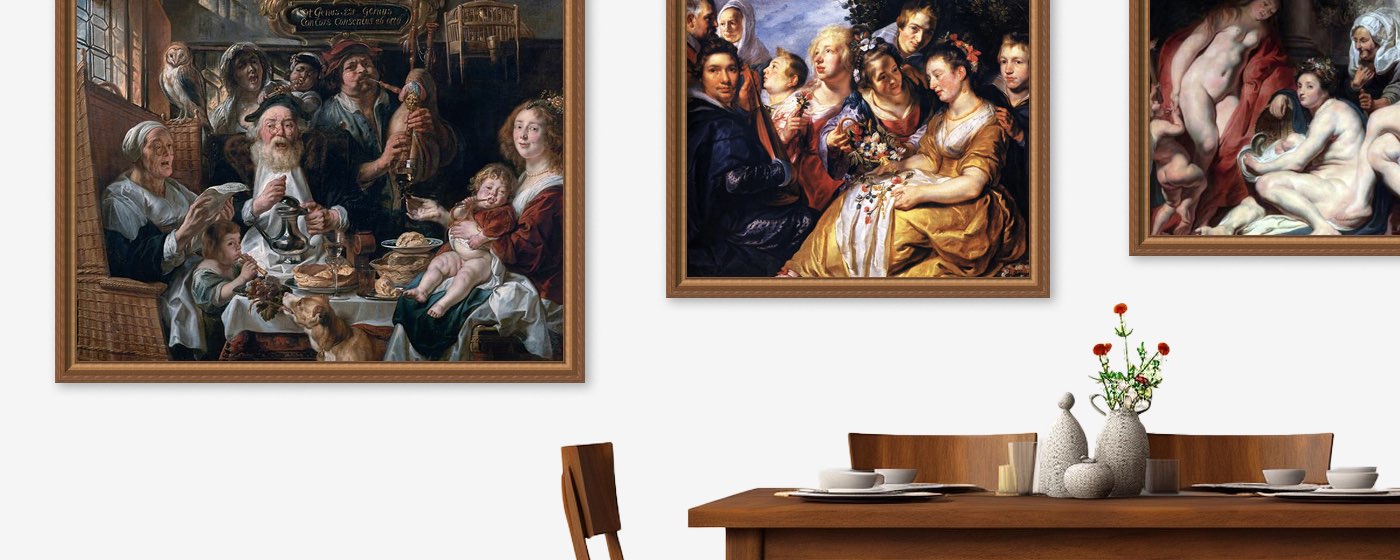
A related interest shapes As the Old Sing, So Pipe the Young. The Antwerp painting dated 1638 brings generations together through music, illustrating the proverb that children follow the example set by adults. The museum’s interpretation emphasizes a family making music, rather than treating every figure as evidence of drunkenness. It identifies the resemblance of the older man to Adam van Noort as plausible, while remaining less certain about other proposed family identities.
This uncertainty is useful. Jordaens drew on familiar people and customs, but a proverb picture is not a reliable census of his household. Its force comes from making an idea about learning and imitation visible through small actions: reading a songbook, keeping time, or trying an instrument.
Why Did a Satyr Join a Peasant’s Meal?
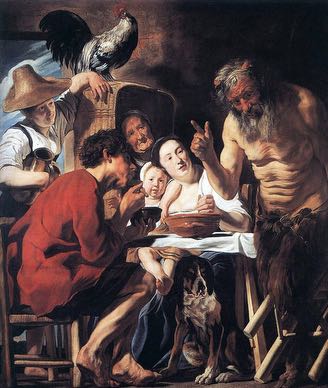
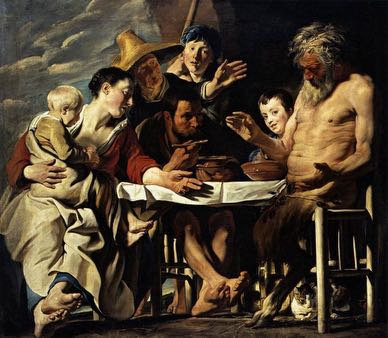
In his repeated treatments of Satyr and Peasant, Jordaens brought a creature from classical tradition into a recognizable household. The story comes from Aesop: a satyr sees a man warm his hands with his breath, then cool his food by blowing on it. Alarmed that the same mouth can produce both heat and cold, the creature distrusts his human companion.
The contradiction provides a ready moral about speaking in two ways, but the painting makes the encounter more complicated than a written maxim. The peasant’s actions are perfectly ordinary. It is the visitor who fails to understand them. A familiar bodily habit becomes strange when seen through another creature’s expectations, allowing comedy to coexist with the fable’s warning.
Jordaens painted the subject several times. The Munich version, dated around 1620–1621, gives the satyr an emphatic reaction and gathers the family close to the meal. Other versions alter the exchange and the viewer’s relationship to it. Dates, figure arrangements, and collection histories therefore belong to particular canvases; they should not be transferred automatically from one Satyr and Peasant to another.
What Connected His Religious Paintings and Classical Myths?
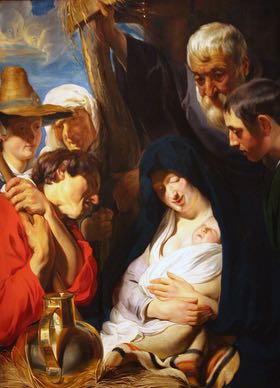
Jordaens gave both sacred and ancient stories a convincing bodily presence. His biblical paintings use close groups, visible age, physical weight, and the movements of parents and children. The Holy Family with Shepherds, dated 1616 and now in the Metropolitan Museum of Art, places devotional meaning within a gathering whose figures feel physically near the viewer.
In The Four Evangelists, dated 1625–1630 by the Louvre, heads and hands gather around the written word. The painting’s intensity comes from concentrated attention rather than a spectacular event. Its forceful light and direct treatment of the models belong to Jordaens’s engagement with the naturalism associated with Caravaggio. This is an artistic relationship, not evidence that the two painters met.
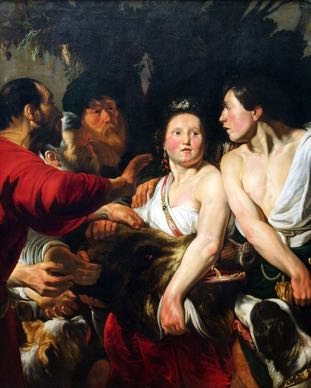
The Daughters of Cecrops Finding the Child Erichthonius, signed and dated 1617, demonstrates how early classical mythology entered his work. The discovery of the hidden child becomes an encounter among substantial figures rather than a remote diagram of ancient learning. Across such subjects, Jordaens used flesh, cloth, glances, and gesture to bring a story into the viewer’s space.
His religious career also complicates a simple division between Catholic and Protestant art. Jordaens later embraced Calvinism, yet continued accepting commissions from Catholic churches and monasteries. A painting’s subject does not by itself establish the painter’s private beliefs. Patronage, professional practice, and personal faith could follow different paths within the same career.
Did His Workshop Produce More Than Oil Paintings?
Jordaens was also an accomplished draughtsman and tapestry designer. Watercolor and gouache allowed him to develop colored compositions on paper, while painted studies could help establish a design before it was translated into another material or enlarged. These works reveal decisions about grouping, movement, and the distribution of light that can be harder to separate in a finished canvas.
The Riding School and Scenes of Country Life are among the tapestry series associated with his designs. A woven hanging required cooperation between the designer and specialist workshops. Its finished appearance depended on decisions made through that process, rather than on the painter personally producing every part of the object.
His busy painting studio likewise complicates attribution. The Museum of Fine Arts in Ghent describes its Allegory of Fertility as probably executed by studio assistants and notes the existence of several versions of the subject. A familiar Jordaens composition does not guarantee that every surviving canvas was entirely painted by him. Looking at the specific object, rather than assuming one title identifies one autograph masterpiece, is essential to understanding his production.
Where Did Jordaens Find International Patrons?
After Rubens died in 1640 and Van Dyck in 1641, Jordaens became a leading painter in Antwerp. His position rested on an established practice, but the absence of those two contemporaries increased his importance to patrons seeking large decorative and religious commissions. The international audience for his work extended well beyond the people and streets of his native city.
One of his most ambitious commissions was The Triumph of Frederik Hendrik, completed in 1652 for the Oranjezaal at Huis ten Bosch near The Hague. Amalia van Solms commissioned the room’s paintings as a memorial to her husband, who had died in 1647. Jordaens’s immense canvas places the prince in a triumphal chariot within a wider program celebrating his life and achievements.
The shift from a crowded meal to a princely triumph was substantial, but both depended on coordinating many figures so that their actions could be read together. In the palace, that skill served dynastic authority: allegory presented the ruler’s achievements as a public spectacle. The commission demonstrates why describing Jordaens only as a painter of exuberant local customs leaves out a major part of his career.
His patrons also included Queen Christina of Sweden and the authorities responsible for Amsterdam’s Town Hall. These commissions show how an artist based chiefly in Antwerp could participate in an international market. The paintings traveled farther than the painter generally did.
Which Paintings Best Explain Jordaens’s Range?
These works connect the early family portraits with religious concentration, proverbial humor, and international court decoration. Where he repeated a subject, the version is identified so that its date is not mistaken for the date of the whole series:
- The Artist with the Family of His Father-in-Law Adam van Noort, c. 1616: A family gathering that also presents the young painter’s cultivation and professional ambition.
- The Daughters of Cecrops Finding the Child Erichthonius, 1617: An early mythological composition that brings an ancient discovery into a vivid physical setting.
- Satyr and Peasant, Munich version, c. 1620–1621: Aesop’s story becomes an animated encounter between a startled visitor and a peasant household.
- The Painter’s Family, 1621–1622: The Prado portrait joins family affection with the display of a successful artist’s social standing.
- The Four Evangelists, 1625–1630: Concentrated light, expressive heads, and gathered hands give religious study an immediate presence.
- As the Old Sing, So Pipe the Young, Antwerp version, 1638: A musical gathering illustrates how the younger generation follows the example of its elders.
- The King Drinks, Jerusalem version, c. 1645: An Epiphany celebration turns a crowded family feast into a theater of appetite and merriment.
- The Triumph of Frederik Hendrik, Huis ten Bosch, 1652: A monumental court commission uses allegory and a triumphal procession to commemorate the prince.
How Did His Long Career End?
Jordaens continued working into old age. His later paintings could be cooler in color and more restrained in their organization than the crowded, warm-toned works most closely associated with his name. His development therefore cannot be described as one unchanging style repeated for sixty years. The mature painter of feasts also adapted his resources to different patrons, settings, and religious demands.
He died in Antwerp on 18 October 1678, aged eighty-five. His Protestant burial took place across the border in the Dutch Republic. That final journey gives concrete form to the religious distinctions within the Netherlands, even though his professional life had crossed them through the work he accepted.
His importance within seventeenth-century painting rests on more than exuberance. Jordaens made gesture, appetite, shared attention, and physical closeness carry ideas about devotion, imitation, distrust, family standing, and authority. His paintings reward a second look at who is gathered, what each person is doing, and what kind of order holds the group together. The familiar faces that make his art approachable are also what give its larger stories their weight.
Copyright © 2026 BrushWiz. All Rights Reserved.
About Our Jacob Jordaens Paintings
Are your Jacob Jordaens reproductions painted by hand?
Yes. Every reproduction is individually painted by hand in oil on canvas by a professional artist. We do not use prints, digital transfers, or mechanical reproduction methods.
How closely do your Jordaens copies resemble the original?
Our artists work to capture the composition, colors, texture, and visual character of the original Jordaens painting as closely as possible. Because every reproduction is painted by hand, small variations are natural and make each canvas unique.
How long does a Jordaens reproduction take to complete?
Most Jordaens reproductions require approximately two to three weeks to paint, dry, and inspect. Production time may vary depending on the artwork and canvas size, so check the estimate displayed on the product page.
Can I request a Jacob Jordaens painting that is not listed?
Yes. If you cannot find the Jacob Jordaens artwork you want in our catalog, send us the painting’s title or an image. Our team will review your request and confirm the available sizes, estimated production time, and price.
Will I receive approval photos before shipping?
Yes. We send high-resolution photographs of the completed painting for your approval. You can request adjustments if needed, and the painting will not be dispatched until the review process is complete.
Are custom canvas sizes available for Jordaens paintings?
Yes. We offer custom dimensions in addition to the standard sizes shown on the product page. Select the dimensions you need directly from the available size options.
May I order my Jordaens painting with a frame?
Yes. High-quality frames in classic and modern designs are available for many paintings. You can view compatible framing options and add your preferred design from the product page. Professional canvas stretching is also available.
What determines the price of a Jacob Jordaens reproduction?
The price depends on the selected artwork, canvas dimensions, and framing option. Choose your preferred configuration on the product page to see the current price before ordering.
Is free express worldwide shipping included?
Yes. Jordaens reproductions qualify for free express worldwide shipping. After dispatch, delivery usually takes five to eight business days, although timing may vary by country and destination.
Which return policy covers Jordaens reproductions?
Orders are covered by our 90-day return policy. Review the current return-policy page before ordering for complete information about eligibility, time limits, and the return process.
Why BrushWiz?
100% Hand Painted
Every piece is entirely handmade
Museum Quality
Faithfully recreated by expert artists
Custom Framing
Choose from a wide range of frames
Free Shipping
Enjoy free shipping on all orders
Cash Back Rewards
Earn cash back with every purchase