
🔥 Limited-Time Sale. Offer Ends 11/10/2026. View Details
🔥 Limited-Time Sale. Ends 11/10/2026. View Details
🔥 Limited-Time Sale. View Details
Artists
Subjects
Movements
Collections
Decor
Portraits
Commissions
Framing
Reviews
Gift Cards
On Sale
Famous Abstract Oil Paintings
Shop reproductions of famous abstract paintings, each hand-painted in oil on canvas. Explore figurative, floral, landscape, and geometric compositions from across modern art.
Shop Art
Showing 81-120 of 2741 results
Sort By
Most Popular
- Most Popular
- New Arrivals
- Best Sellers
- Alphabetical A-Z
- Alphabetical Z-A



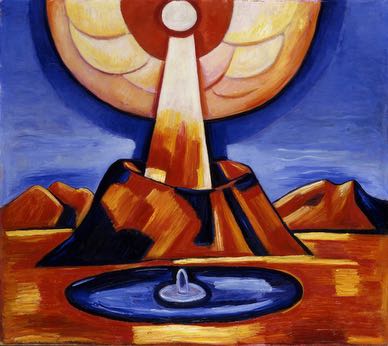
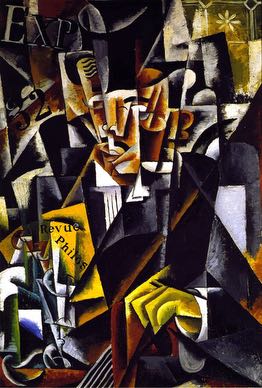
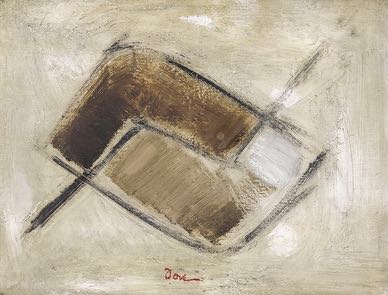
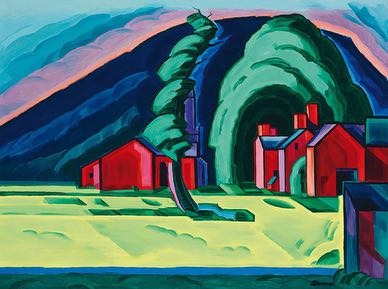
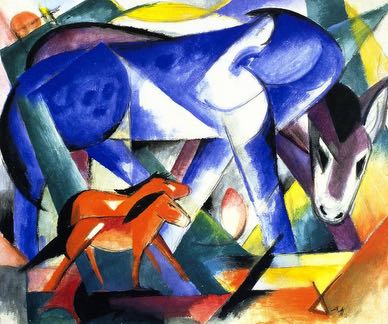
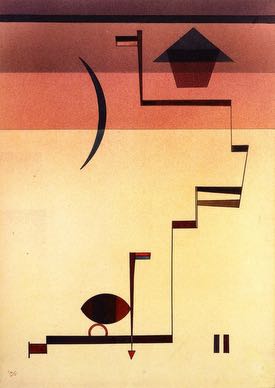
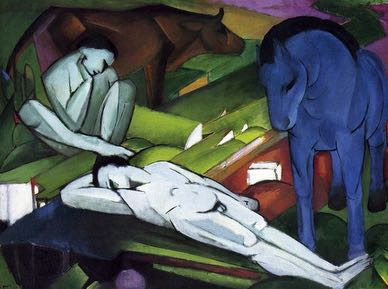

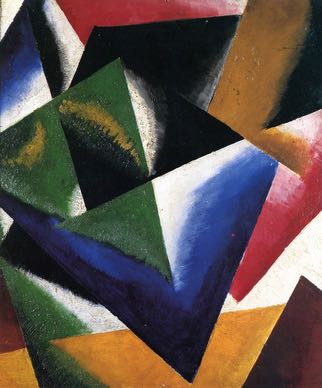

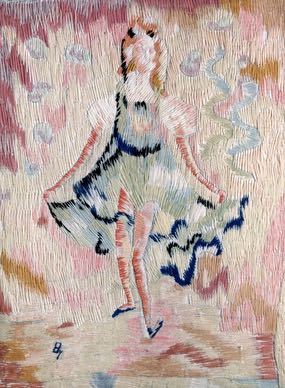
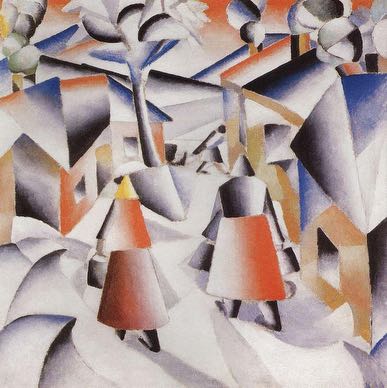
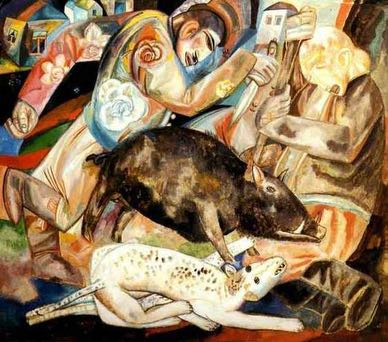


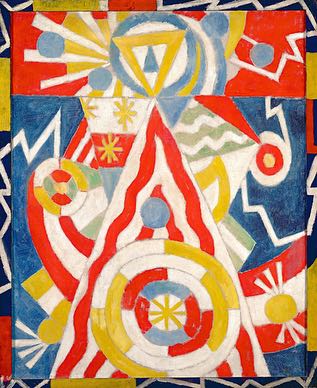
Can’t Find the Painting You Want?
Looking for a specific painting that isn’t in our catalog? Just let us know. We can recreate almost any artwork in the size and style you’re looking for.
Request a PaintingHand-Painted Abstract Oil Paintings
Bring color, movement, and visual energy into your space with an abstract oil painting. Our collection includes thousands of abstract painting reproductions, including Composition VII by Wassily Kandinsky, Black Square by Kazimir Malevich, and Broadway Boogie Woogie by Piet Mondrian. Browse expressive color fields, precise geometric structures, black-and-white designs, abstract landscapes, floral interpretations, and figurative compositions from across modern art. Each reproduction is individually painted by a professional artist in oil on canvas, preserving the relationships between color, shape, line, texture, and space that give the original artwork its distinctive presence.
Recreating Famous Abstract Paintings by Hand
Recreating a famous abstract painting requires close attention to the visual language of the original. Wassily Kandinsky built movement through layered color and dynamic lines, Piet Mondrian relied on proportion and carefully balanced geometry, and Hilma af Klint combined organic forms with symbolic structures. Before painting begins, our artist studies the arrangement, color relationships, edges, texture, and handling of paint that define the work. The composition is then recreated by hand in oil on canvas using an approach suited to its style. Once complete, the reproduction is inspected by our quality-control team and photographed for your approval.
Custom Sizes and Frames for Abstract Wall Art
Your abstract painting reproduction can be ordered in practically any size, from compact canvases for smaller walls to large statement pieces for a living room, office, or commercial space. Standard and custom dimensions are available directly from the product page. After choosing the size, you can add a high-quality frame in a classic or modern design, with professional canvas stretching also available. The right presentation can strengthen bold color, clean geometry, or a quieter neutral composition. With sizing, stretching, and framing arranged together, your abstract artwork can arrive ready to complement the scale and style of your interior.
Order an Abstract Painting with Confidence
Every abstract oil painting reproduction is individually painted and inspected before shipping. Once the canvas is complete, we send high-resolution photographs so you can review its colors, forms, spacing, texture, edges, and overall finish. You may request adjustments if anything needs refinement, and the artwork is dispatched only after you approve the completed result. Free express worldwide shipping is included, and your purchase is covered by our 90-day return policy. These safeguards make it easier to select abstract art online while knowing that you will see the finished painting before it leaves our studio.
Exploring the Boundless Creativity of Abstract Art
Abstract art changed the course of modern painting by allowing color, line, shape, texture, and rhythm to become subjects in their own right. Some abstract works begin with a recognizable figure, landscape, flower, or object and transform it through simplification or distortion. Others are non-objective, meaning they do not depict a visible subject at all. The development of abstraction was not the achievement of one artist or a single movement. It emerged through experiments taking place across Europe and later developed internationally through spiritual inquiry, modern science, music, design, geometry, improvisation, and new ideas about perception. Its history includes both carefully planned compositions and spontaneous approaches centered on gesture and material.
Read More
What Is Abstract Art?
Abstract art does not depend on a literal description of the visible world. An artist may simplify a tree into intersecting lines, turn a figure into blocks of color, or remove recognizable objects completely. This creates a broad range between partial abstraction and non-objective art. A painting can therefore remain connected to nature while presenting it through altered color, fragmented form, or a highly reduced structure.
The term describes many approaches rather than one uniform style. Geometric abstraction often relies on measured shapes, grids, repeated forms, and clearly defined edges. Expressive abstraction may emphasize irregular marks, layered color, movement, and visible brushwork. Biomorphic works use rounded or organic forms, while other paintings draw on symbols, diagrams, architecture, music, landscape, or the human figure. What connects these different methods is the importance given to the visual elements of the artwork itself.
Which Developments Led Artists Toward Abstraction?
During the nineteenth century, painters increasingly questioned the idea that a painting should reproduce nature as accurately as possible. Photography offered a new means of recording appearances, while Impressionism demonstrated that color and brushwork could communicate changing light rather than fixed detail. Artists such as Paul Cézanne organized landscapes and still lifes through underlying planes and structures, helping later painters reconsider how objects could occupy pictorial space.
Fauvism freed color from strict naturalism, and Expressionism used distortion and intensified color to communicate inner experience. Cubism, developed by Pablo Picasso and Georges Braque, rejected a single fixed viewpoint and broke figures and objects into shifting planes. Cubist paintings were not always fully abstract, but their fragmented structures had far-reaching consequences for artists pursuing abstraction in France, Germany, the Netherlands, Russia, and elsewhere.
Artists were also responding to changes in science, technology, cities, transportation, and ideas about the unseen world. Interest in music encouraged comparisons between visual rhythm and sound. Spiritualist and Theosophical thought led some painters to search for images beyond material appearances. These different influences helped make abstraction possible without producing one agreed method or meaning.
Who Created the Earliest Abstract Paintings?
There is no simple answer because several artists moved toward abstraction independently during the early twentieth century. Hilma af Klint began her large, abstract Paintings for the Temple project in 1906. Her works combined spirals, circles, botanical forms, letters, and carefully structured color systems to address spiritual and philosophical ideas. Because much of this work was not publicly exhibited during her lifetime, it did not initially enter the established account of modern abstraction.
Wassily Kandinsky moved from colorful landscapes and figurative scenes toward increasingly independent arrangements of color and form. He also wrote influential theories proposing that visual elements could communicate directly, much as music does. František Kupka developed non-representational compositions through studies of motion, color, and rhythm, while Robert Delaunay used overlapping discs and simultaneous color contrasts to create paintings driven by light and movement.
These artists did not all understand abstraction in the same way. Af Klint connected it with spiritual revelation, Kandinsky with inner necessity and the expressive power of color, Kupka with rhythm and perception, and Delaunay with modern light and chromatic contrast. Their differences are one reason historians avoid treating abstraction as a single invention made at one exact moment.
How Did Geometric Abstraction Develop?
Geometric abstraction reduced painting to fundamental relationships among shape, color, balance, and space. In Russia, Kazimir Malevich introduced Suprematism, using squares, circles, crosses, and angled planes against open grounds. When Black Square was exhibited in 1915, its severe reduction challenged the expectation that a painting needed to represent an object, person, or place.
In the Netherlands, Piet Mondrian gradually transformed trees, coastlines, and buildings into ordered arrangements of verticals, horizontals, and color planes. Through De Stijl and the approach he called Neo-Plasticism, he pursued dynamic balance using a limited visual vocabulary. His grids may appear mechanically exact, yet their proportions and adjustments were developed through an intuitive painting process.
Constructivism carried abstract geometry into posters, books, architecture, textiles, exhibition design, and objects intended for modern life. Liubov Popova, Aleksandr Rodchenko, Varvara Stepanova, and El Lissitzky treated abstract form as part of a wider transformation of visual culture. Their work helped abstraction move beyond the framed canvas and into communication, design, and the built environment.
What Role Did the Bauhaus Play?
Founded in Germany in 1919, the Bauhaus brought art, craft, architecture, and design into a shared educational program. Students began with studies of materials, color, and formal relationships before entering specialized workshops. Abstract thinking therefore became useful not only in painting but also in typography, furniture, textiles, stage design, wall painting, and architecture.
Kandinsky and Paul Klee were among the artists who taught at the school. Kandinsky examined relationships among points, lines, planes, and colors, while Klee developed lessons around movement, growth, structure, and visual rhythm. Josef Albers later explored how neighboring colors alter one another. Although their art differed greatly, their teaching made close observation of form and color central to modern design education.
The Bauhaus closed under Nazi pressure in 1933, but its teachers and students carried its ideas to other countries. Its influence helped establish geometric abstraction as an international language that could connect fine art with functional design. The school also demonstrated that abstract principles could shape everyday surroundings rather than remain confined to galleries.
How Did Abstract Expressionism Change Abstract Painting?
During the 1940s, New York became the center of a loosely connected group later known as the Abstract Expressionists. Their work was diverse, but many shared an interest in large scale, improvisation, personal gesture, and the physical process of painting. European modernism, Surrealist automatism, wartime displacement, and a desire to develop new forms of expression all contributed to the movement.
Jackson Pollock used poured and dripped paint to create continuous fields of movement, while Lee Krasner built energetic compositions through layered marks and revisions. Willem de Kooning moved between abstraction and recognizable figures. Mark Rothko and Barnett Newman developed broad fields of color that encouraged sustained, direct viewing. These approaches are often discussed as two broad tendencies: gestural painting and color-field painting, although individual artists did not fit neatly into fixed categories.
Abstract Expressionism changed how viewers understood the canvas. Rather than acting as a window onto a depicted scene, the painting became a physical field shaped by scale, movement, surface, and the sequence of the artist’s decisions. Its international impact encouraged later artists either to extend its freedoms or react against its dramatic gestures and claims of personal expression.
How Did Abstraction Continue After the 1950s?
Later artists expanded abstraction in many directions. Hard-edge painting favored clean divisions and controlled color. Color Field painters explored broad areas of hue with reduced gesture, while Op art used precise patterns and optical effects to create apparent movement. Minimalism simplified form further and often emphasized repetition, industrial materials, and the viewer’s physical relationship with an object or space.
Other artists kept abstraction fluid and personal. Lyrical abstraction returned to open color and intuitive marks, while painters in many regions combined abstraction with local materials, calligraphy, textiles, landscape, architecture, and cultural memory. Abstract art also entered photography, sculpture, installation, digital media, murals, and public design.
Contemporary painters continue to move between geometric and expressive methods. A work may combine controlled grids with loose brushwork, digital planning with handmade surfaces, or recognizable fragments with non-objective passages. Abstraction remains less a single historical style than an adaptable way of organizing visual experience.
Which Paintings Show the Range of Abstract Art?
These works demonstrate how different artists used abstraction to investigate spirituality, color, geometry, rhythm, and modern life:
- The Ten Largest, No. 1, Childhood, Group IV by Hilma af Klint: Monumental organic forms, letters, and luminous colors present childhood as part of a larger cycle of life.
- Composition VII by Wassily Kandinsky: Intersecting lines, layered colors, and recurring motifs create a densely orchestrated field of movement.
- The First Disk by Robert Delaunay: Circular bands of contrasting color turn light and chromatic interaction into the painting’s central subject.
- Black Square by Kazimir Malevich: A radically reduced form became a defining image of Suprematism and non-objective painting.
- Composition with Large Red Plane, Yellow, Black, Gray and Blue by Piet Mondrian: Unequal rectangles, dark lines, and primary colors create an asymmetrical yet carefully balanced structure.
- Red Balloon by Paul Klee: A bright circular form rises through a delicately constructed field that sits between architecture, landscape, and imagination.
Why Does Abstract Art Remain Popular?
Abstract painting invites attention to relationships that can be overlooked in representational art: the weight of one color beside another, the direction of a line, the pause created by empty space, or the rhythm formed by repeated shapes. Viewers can respond to these qualities without needing to identify a fixed story. The same composition may feel energetic, meditative, ordered, playful, or mysterious depending on its scale, palette, and surroundings.
This openness also gives abstract art unusual flexibility within an interior. Bold geometry can anchor a modern room, layered color can enliven a neutral wall, and quieter forms can introduce movement without a literal subject dominating the space. The category includes abstract figurative works, floral interpretations, abstract landscapes, form-based compositions, and black-and-white paintings.
A hand-painted reproduction preserves the choices that give a famous abstract work its identity. Precise spacing, layered surfaces, subtle color shifts, hard edges, and visible brushwork all contribute to the result. Recreating these qualities in oil on canvas allows the painting to retain a physical surface and individual presence that a flat printed image cannot provide.
Copyright © 2026 BrushWiz. All Rights Reserved.
About Our Abstract Paintings
Are your abstract paintings created by hand?
Yes. Every abstract reproduction is individually painted by hand in oil on canvas by a professional artist. We do not use prints, digital transfers, or mechanical reproduction methods.
What types of abstract paintings are available?
The collection includes expressive, geometric, figurative, floral, landscape, black-and-white, and form-based abstract paintings. You can choose compositions built around bold color, organic shapes, structured grids, subtle neutral tones, or energetic brushwork.
Does the collection include famous abstract artworks?
Yes. You can find hand-painted reproductions of recognized works by Wassily Kandinsky, Piet Mondrian, Kazimir Malevich, Hilma af Klint, Paul Klee, Robert Delaunay, and other artists who developed distinct approaches to abstraction.
How should I choose an abstract painting for my room?
Consider the colors already present in the room, the amount of open wall space, and whether you want the painting to create energy or a calmer focal point. Geometric compositions can reinforce clean architectural lines, while layered color and organic forms can soften a more structured interior.
May I request an abstract painting that is not listed?
Yes. Send us the artwork’s title or a clear reference image. Our team will review whether it can be reproduced and confirm the available canvas sizes, estimated production time, and price.
How closely will the reproduction resemble the original?
Our artists study the original abstract painting’s composition, colors, shapes, spacing, texture, and paint handling so these defining relationships can be recreated as closely as possible. Small variations are natural because every canvas is individually painted by hand.
Which canvas size works best for abstract art?
The best size depends on the composition and your wall. Large abstract paintings can create a strong focal point in a living room or office, while compact canvases work well in smaller spaces or grouped displays. Standard and custom dimensions are available from the product page.
Can I order my abstract painting with a frame?
Yes. High-quality frames in classic and modern designs are available for many abstract paintings. Choose a compatible option from the product page, or select professional canvas stretching if you prefer to display the artwork without a decorative frame.
Will I receive photographs before the painting ships?
Yes. We send high-resolution photographs of the completed painting for your review. You can inspect the color relationships, forms, spacing, texture, and overall finish and request adjustments if needed before the artwork is dispatched.
Do abstract paintings include worldwide shipping and returns?
Abstract paintings qualify for free express worldwide shipping and are covered by our 90-day return policy. Delivery usually takes five to eight business days after dispatch, although timing and return eligibility are subject to the current shipping and return terms.
Why BrushWiz?
100% Hand Painted
Every piece is entirely handmade
Museum Quality
Faithfully recreated by expert artists
Custom Framing
Choose from a wide range of frames
Free Shipping
Enjoy free shipping on all orders
Cash Back Rewards
Earn cash back with every purchase